

When you think of passive income, you almost always think of rental properties. Imagine having rent payments credited to your bank account every month without having to lift a finger! You could retire early and spend your days on the beach, enjoying the sun and sea–living the soft life!
But what if the rent income suddenly stops coming in? Your tenant is suddenly incommunicado. So you book a flight home to California to check what’s happening. Your tenant is still there, but they no longer want to pay rent, and they’re not leaving either. So what do you do? Your rental property is now a massive headache, and your tenant has transformed into a squatter!
What is a Squatter?
The American Apartment Owners Association defines a squatter as someone who occupies real estate property that’s not theirs without permission. However, even if you find them in the vacation home that you only visit every summer, squatters may not be kicked out all willy-nilly. In California, they have rights, and squatters can make a legal claim over your property–provided they satisfy certain requirements.
Trespassing vs. Squatting: What’s the Difference?
You may have heard about trespassers, and you might think they’re very similar to squatters. And you’re right: both refer to individuals who are inside a property that’s not theirs. However, they’re treated differently in the legal sense.
Trespassing
Trespassers are people who break and enter a home, apartment, or any other piece of real estate, vacant or otherwise, without intending to stay there for the long-term. In the eyes of the law, trespassing is considered a criminal act, leaving the offender open to prosecution.
Squatting
On the other hand, squatters claim that they own someone else’s home. They put forward the address on their legal documents, and sometimes they even go so far as to pay property taxes! And unlike trespassing above, squatting is considered a civil matter, and not a criminal one, so it takes much more than calling the local police to legally remove them from your property. While this may sound ridiculous and frustrating, especially if you’re the actual owner with your name on the actual deed, their legal claim can be honored under the doctrine of adverse possession.
That’s a nightmare scenario for any homeowner. No one wants to lose the house they’ve worked so hard for due to some technicality, so before everything else, let’s find out how squatters can gain access to someone else’s property.
How Do Squatters End Up on Your Property?
Illegal Tenancy
If your tenant’s lease is up but they’re still not moving out, they’re known as a holdover tenant. You can renew their lease, but if they’re being difficult and steadfast in their refusal to pay rent, you can start the eviction process by petitioning the court.
Another case of an illegal tenant is when your original tenant, whom you vetted and screened and whose name is on the lease, goes behind your back and sublets your property without your knowledge and permission. Now, when the lease terminates, this subletter-turned-squatter refuses to leave.
Rental Scam
Some people pose as landlords and trick people into signing fake tenancy agreements to scam them out of rent money, even though they’re not the owner. Unfortunately, these unwitting “tenants” become squatters through no fault of their own.
Abandoned or Vacant Property
An empty or seemingly abandoned house attracts trespassers and squatters. They may switch on utilities, receive deliveries and mail to your address, and even pay property taxes to bolster their possession claim.
Invalid or Incorrect Deed
This is rare, but an invalid or incorrect deed may lead you to unintentionally occupy or encroach on someone else’s property.
Legal Standing of Squatters in California
One of the basic rights set forth in the Universal Declaration of Human Rights is the right to property ownership. But what happens when a squatter illegally occupies your California home, depriving you of your right to enjoy the house you’ve worked so hard for?
Can you remove them? Yes. Absolutely.
But, as mentioned above, you can’t just evict a squatter yourself. California law imbues them with squatter rights and protection, which means that there is a procedure that you have to go through in order to evict them. Your title or deed doesn’t provide a legal shield, nor does it guarantee ownership because of a strange doctrine known as…
Adverse Possession Claim
In California real estate law, this principle allows a squatter to become the legal owner of a property simply by staying in it if the real property owners don’t show up after five years have passed. This concept dates back to Roman times and is known in modern times as squatter’s rights.
Fortunately for you and other homeowners out there, successfully transitioning from squatter to owner rarely happens because five conditions of adverse possession must be satisfied.
Actual Possession
When claiming adverse possession, it has to satisfy the condition of actual possession. It means exactly what it says on the tin: actually possessing the property. In other words, they must occupy the property and treat it as an owner would. And that includes paying property taxes every year. Undertaking renovations can also be a literal key to your property. For example, making efforts to improve the land, such as building a fence around it, expanding the patio, and keeping the facade immaculate. These documented efforts are looked upon favorably by the courts, as it shows that the squatter treats the property as their own.
Exclusive Possession
For California squatters to eventually be considered the property owners, they must have the sole use and access to the real estate for the whole five-year statutory period. Exclusive possession is lost if the owner visits or moves back in–even if they allow the squatter to live in it.
They must also maintain the property and ensure that it has not fallen into neglect and disrepair. For example, if the squatter has rendered the home uninhabitable by turning it into a hoarder house, their claim will be invalidated. They also cannot invite or sublet other squatters to occupy the property. Doing so would torpedo their claim.
In situations where a property has already suffered damage or ongoing issues, some owners consider options to sell their home for cash in California to avoid costly repairs and further complications.
Open & Notorious Possession
For this condition to be satisfied, the squatter must openly occupy the property in a way that a random passerby would easily assume that they are the true property owner. Additionally, to make their case stronger and establish open and notorious possession, they must receive packages or mail at the address, behaving as if this is their permanent residence. In case of squatting on commercial spaces, they would also need to conduct business in them.
Another way that the squatter can demonstrate an open and notorious possession is when they pay all property taxes within the prescribed period of five years. These must be backed by receipts kept by the squatter, and the taxes must be paid in full and on time. In case you’ve been paying taxes on the same property for the same time period, it doesn’t automatically negate the squatter’s claim. However, it does make it more difficult for them to prove that they have exclusive possession over the property.
Continuous Possession
Finally, to claim adverse possession in California, the squatter must live on the property continuously, meaning without interruption, for a period of 5 years. This means they cannot leave for a year and then come back, while also counting the time that they’re away as part of the prescribed period.

Hostile Possession
In the context of squatter’s rights, hostile doesn’t necessarily mean aggressive. It simply means that the presence of the squatter is unwelcome, such as when:
- No permission was given to the squatter to occupy or use the property
- The squatter didn’t provide prior notice that they intend to stay or that they are staying on the property
- Property owners are not aware of the squatter’s presence
- No lease contract or rent agreement exists between the owner/landlord and the squatter
Another requirement of proving hostile possession of somebody else’s California home is providing a written notice to the owner that they are occupying their property. This must be given to the owner within the five-year prescribed period, and this cements a squatter’s adverse possession claim. As for the contents of this notice, it must identify the property being occupied and explicitly state the squatter’s intention. If the legal owner cannot be found, the squatter must publish the notice in the local paper. Doing so provides a last chance for the owner to take action against the squatter and retain their rights over the property.
Exceptions to Adverse Possession Law
And so the squatter has satisfied ALL of the conditions above through a well-established and documented claim. They’re on the brink of taking legal ownership over the property that you’ve poured your blood, sweat, and tears into. What now? Is there still a chance to stop this?
It turns out that the reason you haven’t been able to check on your property is that you’ve been deployed in the military for the past 5 years, leaving it open for squatters looking to have a shot at free housing. Fortunately for you, this is a valid reason for the courts to deny a squatter’s claim.
Other exceptions wherein the court may not grant a squatter’s adverse possession claim are when the original owner is underage, incompetent, disabled, or incarcerated.
Nevertheless, if you find yourself facing a strong claim against your property, it’s worth booking a consultation with a real estate attorney who may be able to guide you on the next steps.
What to Do if You Find an Unlawful Occupant in Your Property
If you stumble upon squatters living in your property for an unknown amount of time, you must not, under any circumstances, ignore it. You have to file an unlawful detainer to start the eviction process as soon as possible. Time is of the essence because the squatters’ adverse possession claim grows stronger the longer you delay in taking action.
How to Legally Remove Squatters in California
Finding unwelcome occupants in your vacant California home can be stressful and frustrating. Here are the key things that you must do in order to legally get rid of squatters from your property:
File a Police Report
Immediately call the police and file a police report as soon as you discover unwanted guests on your California property. They will be the ones to make the determination whether the illegal occupants are mere trespassers or full-fledged squatters.
If they’re trespassers, they will automatically be removed without any issue.
If it’s the latter case, however, then you have an upcoming legal battle, as the police won’t be able to do anything. That said, don’t be tempted to take matters into your own hands. Let the legal process run its course to retain your property rights and avoid being in legal trouble.
Serve a Formal Notice to Vacate
Once the police determine that the strangers are squatters, you must serve them a formal notice to vacate. If they have been in the premises for less than a year, you must serve them a 3-day notice to quit. If they have been there for longer, it should be a 30-day notice.
This written notice must clearly identify the illegal occupants and demand that they move out within the required timeframe.
File an Unlawful Detainer/Eviction Lawsuit
If the unlawful occupants are being difficult and refuse to leave the property, you’re left with no choice but to sue. You must file an unlawful detainer, a special type of eviction lawsuit that results in a court order to remove squatters. Although this involves a significant upfront expense, which can run into the thousands, once you win the lawsuit, the other party will be responsible for your legal fees and any other costs arising from damage to your property. Afterward, a sheriff will be deployed to carry out the California eviction.
Remove Personal Belongings
Once you regain possession of your property, you can expect that some of the squatter’s belongings will be left behind. Under California laws, you cannot dump it immediately. You must issue a notice to reclaim personal property, giving them 18 days to take their stuff back. If they don’t show up within the deadline, you can dispose of everything if it costs less than $700. Otherwise, you will be required to hold an auction and turn over the payment to the state of California.
What NOT to Do in a California Eviction
As the legal property owner, we understand that you’d want to remove the squatters by any means necessary–as soon as possible. However, you have to remember that squatters have rights, and you need to keep a level head. Therefore, you must NOT, under any circumstances, do any of the following:
- Shut off utilities
- Threaten the squatter
- Change the locks
- Evict the squatter on your own
What to Do to Protect Your Property from Squatters
The age-old adage of “An ounce of prevention is better than a pound of cure” holds true when it comes to real estate as well. Visiting your property regularly to check for unusual activity prevents squatters and trespassers from trying to move in.
Furthermore, to avoid the hassles, stress, and expense of evictions, being proactive is key. Here are some things you can do in order to protect your property.
Secure Your Perimeter
A sturdy and well-built fence around your vacant property is perhaps the most effective deterrent against trespassers and squatters. As an added bonus, it also increases your property value!
Hire a Property Manager
If you live abroad or out of state and can’t be expected to make frequent visits to your property, it’s worthwhile to hire a property manager to handle things on your behalf. They’ll be the ones to screen and vet tenants and make sure that the rental agreement is enforced. With a property manager, you avoid stressful tenant situations down the line. Sure, you’re sharing a portion of your rental income with them, but the peace of mind that they can give you is absolutely priceless!
Install Security Systems
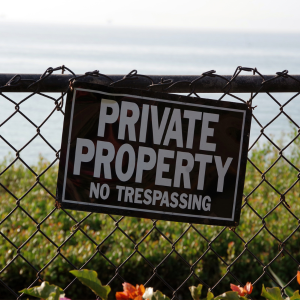
Alternatively, putting up “No Trespassing” signs is a cheap and easy way to stop squatters from calling your property their home sweet home.
Beef Up Your Property Insurance
Beef up your property insurance to cover damages arising from squatter activity. Add in coverage for legal fees, theft, or other liability so that you won’t be overwhelmed if you do discover squatters living on your property.
Closing Thoughts: Squatter’s Rights in California
When an illegal occupant refuses to leave your property, you’ve got a big problem on your hands. You’ll need to lawyer up, file an eviction lawsuit, and hopefully win the case. Needless to say, it takes time and quite a bit of expense–something that’s not very easy to spare.
If that sounds too daunting for you, and you’re wondering if there’s a shortcut out of this mess…
The answer is YES! Here at Eazy House Sale, we’re passionate about helping homeowners with problem properties. We buy houses as is, yes, even those occupied by squatters that you can’t be bothered to deal with. Even better, we’ll pay you in cash for a quick and hassle-free transaction. If you’re interested in knowing our offer, fill in our form below and get it straight to your inbox!
For any questions, feel free to contact us at (855) 915-1382 and look for Geremy. We’re looking forward to hearing from you!
Helpful California Blog Articles
- Who Gets The House In A Divorce In California?
- Can You Sell a House As-Is Without Inspection in California?
- Do All Heirs Have to Agree to Sell Property in California?
- California Squatter’s Rights
- Can You Sell a House in Foreclosure in California?
- Can I Sell My House If I Filed Chapter 13 in California?