

Tap a baseboard with the handle of a screwdriver. If it thuds hollow instead of solid, you may already have tenants you never screened. Drywood termites work quietly for years, and most sellers learn it the same way: a buyer’s inspector crawls the subfloor and comes back with a report nobody wants to read. You can sell a house with termite damage, and you don’t have to lose money doing it. Sellers lose money when they panic, when they hide things, or when they hand a buyer an open problem instead of a priced one. I’ve bought houses with live colonies in the attic. I’ve bought houses with damage from bugs that died out decades ago. Both closed fine.
Can You Sell a House with Termite History?
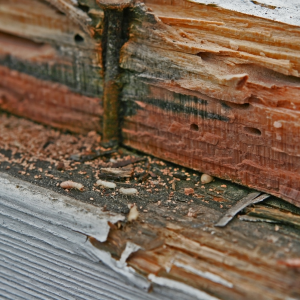
“You can sell this house. Nobody’s stopping you at the door with a clipboard.” That’s usually the first thing out of my mouth. Sellers show up convinced some law blocks a sale until every chewed rafter gets replaced. No such law exists in California. Termite history is a property condition, like a 30-year-old roof or a hairline crack in the slab, and conditions get priced, not banned.
Loan type drives most of what happens next. A cash buyer can close on a house with live termites Friday and have the tent up Monday. A buyer using an FHA loan often can’t. HUD’s rules call for a pest report when the appraiser spots evidence of termites or damage, and once those items show up, the lender wants the treatment done before funding. VA loans go further and ask for an inspection and a clearance every time. Conventional lenders sit in the middle and ask only when the appraisal or the contract flags pests.
So ask early. The moment an offer comes in on a property with pest history, have your agent call the buyer’s loan officer and ask one question: does your underwriter want a pest clearance to fund? A five-minute call in week one beats finding out in week four, after you’ve turned away two backup buyers.
From there you’ve got three paths. You clear the Section 1 items yourself and sell into the full market. You credit the buyer at closing and let them schedule the work. Or you sell as-is for cash and let an investor price the damage into the offer. Local buyers like Eazy House Sale exist for that third path, and a straight as-is number costs you nothing even if you list with an agent instead.
One caution. Don’t pick the middle path blind. Crediting a buyer for damage nobody has measured turns your sale into an argument you can’t win. Their number grows. Yours never does.
Do You Have to Disclose Termites When Selling Your House?
A widow in Long Beach called me the week after she accepted an offer, worried she’d broken a law. Her late husband had the house fumigated twice in the 1990s. She couldn’t tell whether ancient history still counted as a material fact.
Yes, but only because she knew about it. California sellers of one-to-four-unit homes fill out a Real Estate Transfer Disclosure Statement under Civil Code Section 1102. The duty covers known facts that affect the value, desirability, or safety of the property. Past termites, past treatment, repairs you made yourself, a contractor’s estimate sitting in a drawer: all of it belongs on the form or in an attached document.
An “as-is” sale doesn’t erase that. Sellers hear “as-is” and treat it as a legal shield, and that assumption has paid for a lot of attorneys’ kids’ college. As-is says who pays for repairs. It doesn’t say what you get to leave out.
Want the practical reason honesty pays? Under Business and Professions Code section 8516(b), a pest company has to file the address of every property it inspects, or finishes work on, with the Structural Pest Control Board within 10 business days. Anyone can search that database to see whether a property was inspected in the last two years. Copies of the paperwork require a written request, so it isn’t instant. It’s still very much findable.
When you write it up, skip the adjectives. Don’t call damage “minor” or promise a treatment “took care of everything.” You’re guessing, and a buyer’s attorney will read it as a guarantee. Stick to what happened and when: the company name, the rough year, what they said they did, and whether you had repairs made after. Fuzzy on dates? Say so on the form rather than inventing a year.
Attach the old reports and hand the pile over early. If the history is messy, or you’re selling an inherited property you never lived in, a short call with a lawyer costs far less than a lawsuit after closing.
How Does Termite Damage Affect Your Home’s Value?
Picture a tidy 1960s ranch that appraised at full asking price in the spring. Then the pest inspection flagged live drywood termites in the attic framing and fungus damage along a bathroom subfloor. Every offer after that came in under list.
Buyers discount for uncertainty, not for termites. That’s the part sellers miss. A clean report showing the work done and the framing replaced barely dents your price, because the unknown turned into a receipt. An untreated Section 1 finding invites the buyer to imagine the worst, and their imagination is expensive.
Scale matters too. Redfin put California’s median sale price at $746,890 in August 2026, so even a small haircut on a typical property is real money. Cosmetic damage to a windowsill rarely moves that needle. Chewed floor joists, a sagging subfloor, or soil-to-wood contact that’s been feeding a colony for ten years absolutely does.
Last year I looked at a mid-century place in Riverside for the adult children of a homeowner who’d moved into memory care. A contractor had priced a full kitchen rebuild, since termites had gotten into the cabinet bases and part of the floor. His number came in higher than a brand-new kitchen would have added to the sale price. They’d been sitting on that estimate since Thanksgiving, frozen. We bought it as-is, tented it ourselves, and they stopped writing checks on an empty house. That’s routine work for us, since we buy houses in Riverside in any condition.
Sellers lose the most money by spending more on a repair than the repair returns. Get two or three bids before you believe the first one. Make sure each bid is scoped from the same report, so you’re comparing the same work. A contractor who prices “whatever’s rotten once we open it up” hasn’t given you a number. He’s given you a range with no ceiling. Once the bids land, you’re facing the same call every owner of a damaged house faces, whether to renovate or sell as-is.
What Will a Termite Inspector Look For?
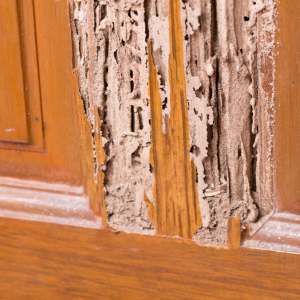
A licensed Branch 3 field representative inspects the interior, the exterior, the attic, the garage, and the crawl space. Then he sorts every finding into two buckets.
Section 1 covers live termites or active rot and the damage already done: mud tubes climbing a foundation, wood-decay fungus in a shower wall, beetle galleries in a beam. Section 2 covers conditions likely to invite trouble later. Earth-to-wood contact. Cellulose debris left under the house. A sprinkler head soaking the siding every morning at six. Lenders and escrow officers care about the first bucket. Smart buyers read both.
Help the inspector help you. Clear the boxes out of the garage corners, open the crawl space hatch, move the bins off the attic access, and cut back the shrubs. Every square foot he can’t reach becomes a note on the report, and notes become buyer leverage.
Watch for the “further inspection recommended” notes. When an inspector can’t get into a sealed wall or a crawl space packed with ductwork, that area isn’t clean. It’s unexamined. A report peppered with those notes across the main structural areas will hold up funding faster than a page of confirmed findings.
One more thing. California reports cover fungus and dry rot along with insects, which is broader than most states. Plenty of the termite damage I’ve bought turned out to be a slow plumbing leak that rotted a subfloor over fifteen years. If that’s your situation, the playbook for selling a house with water damage in California overlaps heavily with this one.
Termite Treatment Timeline and Remediation Warranties Buyers Want to See
I used to think a paid fumigation invoice would satisfy a buyer. It isn’t close.
Escrow wants the clearance: the signed notice of work completed, plus the certificate saying the house is free of live termites, or free except for named areas. An invoice proves you spent money. A clearance proves it to the buyer. Not the same paper. I’ve watched a funding date slip a week over that mix-up.
Scheduling runs faster than most sellers fear. Localized treatments, whether heat, orange oil, or a chemical spot job, take one visit. Whole-house fumigation means clearing out with pets and plants for roughly one to three days, counting the hours it takes to air the place out. Repairs to chewed wood come after, and carpentry is what stretches a calendar, not the gas.
Budget patience for the prep. Anything you’d eat or swallow goes in the bags the fumigator hands you, unless it’s factory-sealed. Pantry, fridge, bathroom cabinet. The gas utility has to shut the service off and come back to relight it, and that appointment wants two or three days of notice. The relight usually decides when you get your keys back.
Warranties deserve harder reading than anyone gives them. Many annual plans sold here are retreat-only bonds. If termites come back, the company sprays again, and that’s the whole promise. The bond pays nothing toward a new joist. A repair-inclusive warranty costs more and earns its keep on a house you plan to hold. For a listing, what carries weight is a transferable plan with a current renewal.
Buyers want three pieces of paper before they’ll drop a contingency: the report, the clearance, and proof the warranty transfers. Assemble those and the back and forth gets shorter.
Termite Treatment Cost vs Offering Buyer Concessions
Paying to tent the house feels like handing money to a buyer who’ll ask for a discount anyway. Fair objection. About half the time it’s right.
Look at the numbers instead of guessing. Published California ranges put fumigation around $1.30 to $4.35 per square foot, though bids swing hard on roof height and access. Spot work lands well below that. Repairs to damaged framing sit in their own category, separate from the treatment itself. One rim joist might run a few hundred dollars. Past $10,000 is normal once a colony has been chewing a bearing wall.
Here’s where sellers get burned. A buyer asking for a credit doesn’t want your contractor’s number. He wants his contractor’s number, padded for the trouble. I’ve seen credits demanded at two and three times the cost of the work. Doing the treatment yourself, with a bid from a company you picked, usually costs less than buying your way out of the argument.
If you do negotiate a credit, negotiate against a written bid in your hand, not a number the buyer read somewhere. Attach your estimate to the counteroffer and cap the buyer’s credit there. The tone shifts once paper sits in the middle of the argument.
The exception is a distressed or empty property. If you’re carrying a mortgage on a house nobody lives in, four more weeks of prep and clearance can cost more than the discount you’re dodging. Cash buyers such as Eazy House Sale build the pest work into their own numbers, so the math tilts toward speed.
An escrow holdback splits the difference. Funds sit with the escrow company, the work happens after closing, and the buyer’s lender stays comfortable. Ask whether the lender allows it before you promise anything.
How to Market a House with Termite History
Hide the pest report, and you’ll pay for it in week three of escrow. The buyer’s inspector finds everything anyway, and now he thinks you were hiding it.
Leading with the report does something backwards. It builds confidence. Post the WDO report, the clearance, and the warranty transfer as disclosure documents available at the first showing. Buyers who see all three stop wondering what else is wrong. Buyers who find the history on day twelve start wondering about the roof, the plumbing, and you.
Photography matters. Shoot the repaired areas, not around them. A tight photo of new joists under a rebuilt bathroom floor reads as competence, and competence keeps a price intact.
Speed helps in this market. California’s median days on market sat at 42 days in August 2026, five days faster than a year earlier. A house that sits three months signals a problem to everyone watching. Price it right on day one and let the paperwork settle nerves.
Think about which buyer you’re writing the listing for. A remodeler reads “Section 1 work completed, transferable warranty” as reduced risk, something I’ve watched play out after buying houses with old pest damage. A first-time buyer using mortgage financing with tight overlays reads the same line and calls the loan officer nervously. Write for the buyer your house actually suits, and a house with lingering damage suits investors and renovation-loan buyers far better than nervous newcomers.
Sell for More with a Local Real Estate Expert in Your Corner
An agent who’s never cleared a Section 1 report will cost you more than the termites did.
Pest work rides on who you know. Agents who close in older wood-frame neighborhoods keep two or three Branch 3 companies on speed dial. They know which ones write reports that hold up, and which ones pad findings to sell treatment. That network shortens your escrow by days and your price cut by thousands.
Interview for it. Ask any Realtor® you’re thinking about hiring how many transactions they’ve closed with pest clearances in the last two years, and who they’d call to re-inspect a disputed finding. Vague answers tell you plenty. Then ask what they’d do if the buyer’s inspector came back with findings you never wrote up. The good ones start with a second opinion, not a knee-jerk credit.
Competition still exists for well-presented homes. Statewide, 36.8% of California homes sold above list price in August 2026, up 3.2 points from the year before. Termite history doesn’t rule your property out of that group. Sloppy paperwork does.
There’s also a case for skipping the listing. Commissions, staging, months of carrying the property, and repair credits add up. For an inherited property in rough shape, the net to a seller is sometimes higher with a direct cash sale. I’ve watched families chase an extra five percent on paper and lose more to holding costs and a second round of credits.
Neither route wins by default. Ask an agent what your house would really bring on the open market, then reach out to Eazy House Sale for a real as-is offer on the same house. Put both numbers side by side and compare net proceeds, not headline prices. That’s the comparison that pays, and you can take your time with it.
Find Out What Your Home Is Worth Today
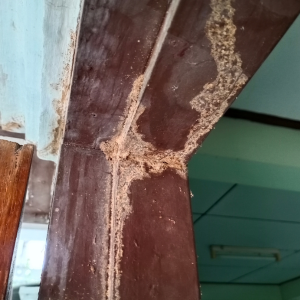
What’s this place worth with termite damage?
Nobody can answer that from a photo. Three things drive the number: how much of the damage touches structural members, whether the colony is still alive, and how fast you need to be out. A house that needs a tent and one bathroom subfloor trades close to market. A house with chewed joists across half the footprint trades like a project, because that’s what it is.
Local demand swings it. San Diego County stayed a seller’s market in August 2026, with the median home going pending in 28 days and inventory down 5.6% from a year earlier. Tight supply gives damaged properties more room than they’d get in a slow market. We buy houses in San Diego as well, and a pest report doesn’t take that county off the table.
A homeowner in Fontana reached me three months behind on his mortgage, with an auction date on the calendar and a garage full of his father’s woodworking tools. The pest report showed subterranean activity along the north foundation. No traditional buyer could have funded on that property in time anyway. We closed in eleven days. He kept the tools, and the foreclosure sale never happened.
Start with two numbers. A broker price opinion for repaired condition, and an as-is cash offer for today. Subtract the honest cost of treatment, repairs, commissions, and the months of mortgage, insurance, and utility payments you’d carry while the work happens. Whatever’s left is the real comparison. Eazy House Sale will give you that second number for free, and having both turns a vague worry into a decision you can make in an afternoon.
Frequently Asked Questions
Should I Buy a House That’s Had Termites Before?
Prior treatment isn’t a red flag by itself. In drywood country, a house nobody has ever inspected worries me more than one that’s been tented and cleared. Read the report and the clearance together, and check whether any protection plan transfers to you. What you’re judging is whether the chewed wood got replaced or just painted over.
Can a House with Termites Be Saved?
Almost always. Fumigation or a localized treatment kills the colony, and damaged framing gets sistered or swapped out by a carpenter like any other repair. Total losses are rare. They usually involve decades of hidden moisture and fungus, not insects alone. The real question is whether the repair bill makes sense for you, not whether the house can be fixed.
Do Termites Lower What a Home Sells For?
Untreated ones do, and the discount buyers ask for tends to beat the actual repair cost. Documented, cleared, warrantied work brings the hit close to nothing, because you’ve traded a scary unknown for a finished job. You’re paying for certainty, not for lumber.
What Smells Do Termites Avoid?
Orange oil, which contains d-limonene, gets used against drywood termites in localized treatments, though lab testing found it left survivors in the wood. Cedar and clove oil show some repellent effect in small lab tests. None of it clears a structure.