
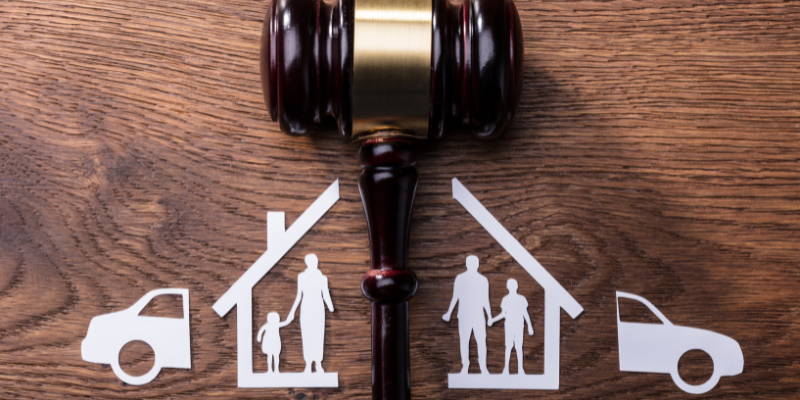
When there is a change in marriage, the house often becomes the hardest part to sort through. It’s not just a property, but it’s the place where routines happened, where the mortgage got paid, where kids came home from school, and where many big decisions now have to be made. That is why one of the first questions people ask is who gets the house in a divorce in California, and what happens next?
In California, the answer depends on how the house is classified, whether children are involved, and whether one spouse plans to keep, buy out, or sell the home under California divorce laws. In general, California treats property acquired during the marriage as community property, while property owned before marriage, after separation, or received by gift or inheritance is separate property.
That may sound complicated at first, but the good news is that the answer becomes much more straightforward once you break it into a few clear parts. Once those parts are clear, both parties can see which option is best for the house and for the people involved.
Who Gets the House in a Divorce in California? The Short Answer
The short answer is: it depends on whether your house is a separate property, community property, or a mix of both under California law.
If your house is a separate property, the spouse with that separate interest may keep it. If the house is community property, the value is usually divided equally in California, but that does not always mean both spouses keep the house.
In most cases, the outcome is one of three things: one spouse keeps the house, one spouse buys out the other, or the house is sold, and the proceeds are divided.
What Decides Who Gets the House in a California Divorce?
As we mentioned earlier, to understand who gets the house in a California divorce, the answer starts with how the home is classified under California law. Here’s how each type works:
The House Is Community Property

In general, California is a community property state, and property acquired during the marriage is often treated as marital property for division purposes. That means both spouses can share an interest in the home, even if only one spouse is on the mortgage or one spouse brought in more income during the marriage, as explained by the California Courts.
If your house falls into this category, the value is most likely divided equally, meaning the couple’s community property will be divided fairly under California law. That doesn’t mean the house itself has to be physically split or that both spouses stay tied to it. It simply means the value of the property has to be handled fairly as part of the divorce under California Family Code section 2550.
The House Is Separate Property
Separate property mostly includes property owned before marriage, property acquired after separation, and property received by gift or inheritance by the spouse that is considered to have a separate interest. If the house clearly falls into that category, one spouse may have a stronger claim to keep it in California.
Still, that is not always the end of the story. A house that started as separate property can become more complicated if marital money was later used to pay the mortgage, reduce the loan, or improve the property.
The House Is Partly Separate And Partly Shared
This is where many situations get more specific. One spouse may have bought the house before marriage, but both spouses later helped pay for it, or one spouse may have used separate funds for the down payment while the mortgage was paid during the marriage.
For this type of case, the house could be partly separate and partly community property under California rules. The California Courts further explained that property can be mixed or commingled, which can affect how it is divided.
Does the Name on the Title Decide Who Gets the House?
Not always. In a California divorce, the name on the title can matter, but it does not always decide who gets the house by itself.
That surprises many Californians at first. It is easy to assume that if one name is on the deed, that person keeps the home, or if one name is missing, that person has no real claim to it. But divorce cases can go deeper than that. The real question is not only whose name is on the paper, but also when the house was acquired, how it was paid for, and whether both spouses built equity in it during the marriage.
As explained in the California Courts’ property and debts in divorce guide, the name on the title is only one part of the picture. What matters just as much is when the house was acquired and whether it is treated as community or separate property.
That’s why the better way to look at it is:
- When was the house bought?
- Was it paid for with marital income?
- Did both spouses contribute to the mortgage, upkeep, or improvements?
- Was the home ever refinanced or transferred during the marriage?
Once the property’s title is no longer the only focus, the next question is what changes when children are involved?
Who Gets the House in a Divorce With Children in California?
When children are involved, the question of who gets the house in a California divorce can feel even more important and more emotional. Both parties must understand that this is not only about property value but also about routine, stability, school, and making a hard transition feel less disruptive.
Still, who gets the house in a divorce with children in California is not decided by children alone. Children do not automatically determine final ownership of the home. As explained in the California Courts’ child custody and parenting plans guide, custody decisions are based on the best interests of the child, while property division is handled separately. That means children may affect who stays in the home for a period of time, but they do not decide who keeps the house in the end in California.
In most cases, it comes down to two things: who stays in the home during the divorce and what happens to the house after.
Can the parent with the children stay in the house?
Yes, sometimes. It could create more stability for the children during the divorce proceedings; one parent might live in the home for some length of time.
California family law allows people to request temporary orders while the divorce process is pending, including orders related to property control or household arrangements. That can be helpful when both sides need time to sort through the larger decision without changing everything at once.
Does custody decide who keeps the house for good?
Not always. Temporary possession is not the same as final ownership.
Staying in the home during the divorce does not mean that the other party will keep it long-term. The final outcome can still be a buyout, a sale, or another form of property division.
In simple terms, the short-term living arrangement and the long-term ownership decision are handled separately.
Your Options for the House in a California Divorce
In most California divorce cases, the options are fairly consistent. The right one depends on the home, the finances, the level of agreement between both spouses, and what outcome makes the most sense moving forward. Hughes Law Group highlights several common paths, including sale, buyout, or keeping the property for a period of time before a later sale.
Sell The House and Split the Proceeds

Many couples will find this to be the best and easiest option.
When you sell your house for cash, it makes it much easier for both parties to split the value of that asset. This is the best option for couples who don’t want to keep the house, can’t afford it on their own, or are looking for a simple, cleaner financial separation.
In most cases, the sale proceeds go first to the mortgage payoff, liens, taxes, and sale-related costs. The amount remaining is what’s available to divide. That’s why it’s important to focus not only on the sale price but also on the amount left after all costs are paid.
Another factor to consider is California Proposition 19 (Prop 19), which can limit property tax benefits to a single homeowner.
For couples trying to divide a home in a divorce in California, this option often feels the most straightforward. If speed matters, companies like Eazy House Sale can help you sell your house fast for cash in California without repairs or a long listing process, which can make it easier to move forward.
One Spouse Buys Out the Other’s Share
This option works when one spouse in California wants to keep the house and has the ability to do so.
A buyout means one spouse keeps the property and gives the other spouse value for their share. This can happen through refinancing, cash, or offsetting other assets.
This option can make sense when:
- One spouse wants to stay in the home
- The house fits the long-term budget
- Keeping the home avoids a move that neither side wants right now
The key here is to make sure the numbers are clear so both sides understand what the home is worth and what each share looks like.
Keep The House for Now and Sell Later
In some California divorce cases, both spouses agree to keep the home for a period of time and sell it later. This often comes up when timing matters or when both sides need more time to make a final decision.
This can work well when:
- The children are in the middle of school
- One spouse needs more time before moving
- The market timing matters
- Both spouses agree on how the property will be handled in the meantime
This option works best when there is a clear plan in place. That includes who pays the mortgage, property taxes, insurance, and upkeep while the home is still being held.
Trade the House for Other Marital Assets
In many cases, a couple does not have to sell their house to divide it fairly during a divorce in California and can instead balance it against other marital assets. One spouse gets to keep the property, and the other spouse receives marital assets of equivalent value in exchange. Examples of such marital assets include:
- Retirement accounts
- Savings
- Investment accounts
- Cars or trucks
- Additional properties (vacation homes)
When both parties agree on this arrangement, it can provide an acceptable alternative to selling the marital home.
When Selling the House May Be the Best Option in California
Selling is not the right answer in every California divorce. But in many cases, it is the option that creates the most clarity, especially when the real estate side of the situation has become difficult to manage.
In California, a sale can make the most sense in situations like:
- The monthly cost of the home is too high for one person to carry
- The home needs repairs
- Neither spouse wants to keep it
- Both sides want a simpler financial break
In those situations, selling can remove a major source of uncertainty and turn the property into something much easier to divide. This can also be helpful when the home has become difficult to manage during the divorce process.
A sale can:
- Reduce ongoing coordination
- lower carrying costs
- make it easier for both sides to move into the next chapter with more clarity
For homeowners thinking about selling a house during a divorce in California, this is often the point where the practical side starts to matter more than the emotional side. The question becomes less about keeping the property at all costs and more about choosing the option that leaves everyone in the strongest position possible.
Steps to Take Before Deciding Who Gets The House in California
Before you decide whether to keep the house, buy out your spouse, or sell in California, get clear on the numbers and paperwork first. That makes the whole process much easier.
Find Out How the Home Is Likely to Be Treated
Start with the first question: is the house separate property, community property, or partly both?
That answer shapes almost everything that comes next. California Courts make it clear that property classification plays a major role in how property and debt are handled in divorce.
Know the Home’s Value and Equity
In California, you cannot compare a buyout with a sale unless you know what the home is worth and what is still owed on it.
A good place to start is with:
- the estimated current value
- the mortgage payoff
- any liens or home equity loans
- expected selling costs
- the likely net proceeds after everything is paid
That last number often matters most. It gives you a much clearer picture of what the home may actually leave behind.
Gather the Paperwork Tied to the Home
In California, a few key documents can make the situation much easier to understand.
That includes:
- the deed
- mortgage statements
- refinance paperwork
- home equity loan records
- down payment records
- major repair or improvement receipts
- bank records showing how payments were made
These records can help show when the home was acquired, how it was paid for, and whether one or both spouses built equity in it over time.
Talk to a California Divorce Attorney Before Signing Anything
If the house is one of the biggest assets in the divorce, legal guidance from a California divorce lawyer can make a big difference.
A short conversation with a California divorce attorney can help you confirm how the home is likely to be treated and what the smartest next step is. Once that part is clear, the practical decision becomes simpler, and for some homeowners, it’s selling the house without adding more steps than necessary.
FAQs About Who Gets the House in a Divorce in California
Can I Keep The House If It Is Only In My Name?
While having your name as the sole owner of a home can be helpful in keeping you in possession in California, the court will also look into several other factors. These include the duration the home was owned, how the down payment was made (if through separate property or marital funds), and whether marital funds were used to maintain the home.
Can One Spouse Force The Sale Of The House?
If both spouses cannot agree on what should happen to the house, the divorce court may need to decide. California Courts explain that temporary and final property issues can be handled through the divorce process and court orders.
Who Gets The House In A Divorce With Children In California?
Children may affect who stays in the house for a period of time, but they do not automatically decide final ownership. Property division and custody are related in real life, but they follow different legal rules.
Can One Spouse Buy Out the Other?
Yes. If one spouse wants to keep the home and the financial side works, a buyout is often possible through refinancing, cash, or balancing other property.
Is California Always 50/50 When Dividing a House In Divorce?
California generally divides community property equally in value, which means each spouse is generally entitled to an equal share of that value, but that does not always mean the house itself is split in half or that both spouses stay on title. The result still depends on how the property is classified and what agreement or order resolves it.
When Selling the House May Be the Right Option in a California Divorce
When you decide that selling your house will be the best solution, the next thing you have to figure out is how to do it easily and quickly.
Eazy House Sale makes it easy for California residents to sell their homes to us quickly, without needing to fix up the property, pay an agent’s commission, or go through a lengthy listing process. At Eazy House Sale, we buy houses in Los Angeles and other nearby cities, as-is, so if there are issues with the home, we will still purchase it from you. This will give you the opportunity to move on faster than you would normally be able to.
Many people prefer our service because it offers the simplest route possible. You will not have to spend time, money, or effort on repairs, cleaning, staging, or waiting for potential buyers. Instead, you can simply contact us and receive a direct cash offer for your home. Once you receive the offer, you will also get to choose the closing date that fits your needs.
If you want to sell quickly, eliminate any additional work, and convert the equity in your home into cash that will be easier to split, Eazy House Sale may be able to assist you.
Helpful California Blog Articles