
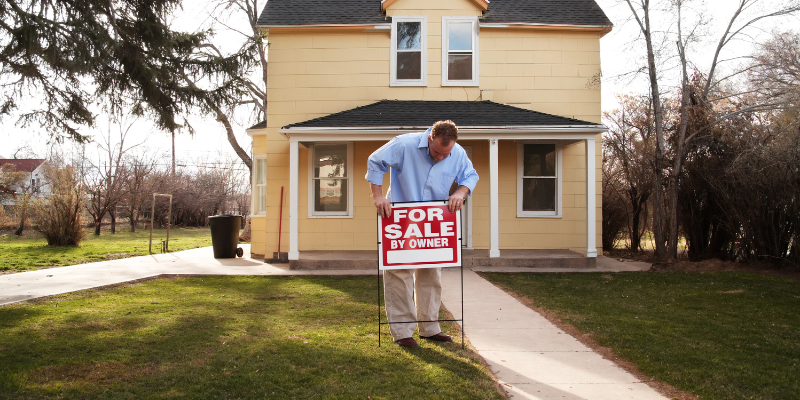
Learning how to sell a house by owner in California might sound foolish in a market where the statewide median home price reached $901,420 in August 2026, up 0.1% from a year earlier. But if you’re thinking about it, you’re not alone.
To be honest with you. Most real estate brokers won’t tell you this, but FSBOs made up 5% of all U.S. home sales in the National Association of Realtors 2025 profile. That is still hundreds of thousands of homeowners who took control of their biggest asset rather than paying tens of thousands to an agent.
This is what’s going on in California’s housing market currently. Homes sold in a median of 28 days in August 2026, down from 31 days a year earlier. You’re in a market that’s still moving, but not the white-hot seller’s paradise we witnessed a few years back. So you need all the advantages you can get.
How to Sell Your House by Owner in California Without a Real Estate Agent
Selling without an agent is not only about saving money. It’s about taking ownership of the whole process.
California has some of the most stringent real estate rules in the nation. A seller of residential real property containing one to four units is required by law to disclose known substantial information influencing the value or desirability of the property. If you miss something vital, you may be writing checks well after close.
The first step in the FSBO procedure is to learn about your local market. Homes are selling differently in Sacramento than in San Diego County. Riverside buyers have different expectations than Orange County buyers.
California FSBO Legal Requirements and Disclosures
This is where most FSBO sellers go wrong. California disclosure laws don’t care if you have an agent or not.
Not using a real estate broker to sell property does not relieve you of your legal obligations under California’s disclosure rules. But FSBO sellers are held to the same statutory and common-law requirements as licensed professionals and often face more exposure since they lack the benefit of professional oversight.
Just think about it. You are held to the same legal standards as licensed professionals, but don’t have their training or insurance.
The key disclosure obligations are:
Real Estate Transfer Disclosure Statement (TDS)

The biggie. In California, this is the Real Estate Transfer Disclosure Statement (TDS) and the Seller Property Questionnaire (SPQ). You must report all known defects, repairs, or problems with the property.
Natural Hazard Disclosure Statement
Natural Hazard Disclosure (NHD) Required by Civ. Code § 1103 if the property sits in a flood zone, earthquake fault zone, fire hazard area or other specified region. Given the geography of California, this covers most properties in the state.
Lead-Based Paint Disclosure
Federal law (42 U.S.C. § 4852d) requires the following disclosure for dwellings built before 1978. If your house was built before 1978, you need this whether you know about lead paint or not.
Death Disclosure
Under Civ. Code § 1710.2, the seller must disclose any death on the property during the preceding three years, unless it involved AIDS or HIV, which are protected under anti-discrimination law.
Mello-Roos Special Tax Disclosure
Mello-Roos and Special Tax Disclosure, as required under Gov. Code § 53341.5, if applicable.
My advice? Obtain legal assistance with disclosures. It’s cheaper than a lawsuit.
Necessary Documents and Paperwork for FSBO Sales in California
Beyond disclosures, you’ll need a pile of documentation that would make a government bureaucrat pleased.
Purchase Agreement
This is not a one-page handshake contract. In California, purchase agreements can be 10+ pages long and have contingencies, timetables, and legal safeguards for both parties. Real estate purchase contracts are legal documents that must meet the requirements of California contract law. With FSBO transactions, sellers often download forms from non-legal sources that are out of date or badly worded.
Preliminary Title Report
This can help you to detect any liens, encumbrances, or title concerns. Most buyers will not go forward without seeing a clear title.
Property Tax Records
Current and historical tax information, including any pending assessments or special district taxes.
HOA Documents
You’ll require HOA documents such as CC&Rs, bylaws, financial statements, and meeting minutes. Have a homeowners association? Inform buyers of the specifics on the rules and fees. Make sure to advise the buyers of any pending legal actions by the HOA in California.
Inspection Reports
Sellers aren’t compelled to provide these, but having current pest, structural or systems inspections can help hasten a transaction and ease buyer fears.
Utility Bills
Recent statements show average costs for power, gas, water, and trash service.
Permits and Warranties
Documentation for any additions, renovations, or significant repairs. Buyers want assurance that the work was legal.
Insurance Info
Your current insurance coverage and any claims history, if applicable.
How to Find the Right Market Price to Sell Your California Home
The area where FSBO sellers most often fail is pricing. It’s also where they can be most successful.
Agents value homes via a Comparative Market Analysis (CMA). You may do the same thing, but you have to be relentless about objectivity.
Start with recent sales in your neighborhood. Not comparable houses. Not the homes you believe are similar. Homes that have sold in the last 90 days within a quarter-mile of your home.
What to look for: Sale price vs original listing price, Days on market, Price per square foot, Lot size and features, Condition and updates
Then look at the competition now. What’s currently on the market in your area? How long have the listings been posted? Are sellers lowering prices?
My FSBO pricing strategy: price aggressively from day one. Overpricing can take away your momentum, and you can’t get that back. You can always negotiate higher, though.
You may want to consider a professional appraisal. Costs $400-600, but you get defensible pricing data, which might be useful in discussions.
California Home Staging to Attract Serious Buyers
Take out 50% of your furniture and 75% of your personal items. Buyers want to see space, not your things.
Concentrate on these crucial areas:
Kitchen
Kitchens sell homes in California. Clean, bright, and roomy beats granite and stainless steel. If you have old appliances, try replacing the most prominent ones or at least giving them a full cleaning.
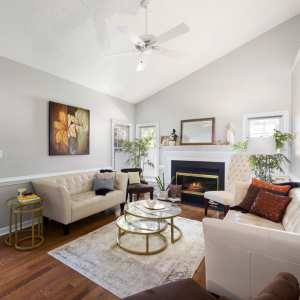
Master Bedroom
Make it a hideaway. Neutral colors, half decent bedding, minimal furniture. Buyers should feel comfortable, not crammed.
Bathrooms
They should gleam. Replace old towels, brighten lighting if necessary, and consider painting if the hue is out of date.
Living Areas
Use furniture placement to depict traffic flow and functionality. Do not leave family photos or personal items.
Curb Appeal
First impressions count before buyers go inside the house. A fresh coat of paint on the front entrance, trimmed grass, and clean walkways matter more than costly upgrades.
Don’t improve too much. Hire a pro real estate photographer (average cost $123-$272 per session). Professional images will accomplish more for your sale than a pricey setup.
California purchasers want homes ready to move in, especially at the higher end of the price scale. But move-in-ready doesn’t mean newly refurbished. It signifies clean, well-maintained, and thoughtfully presented.
Writing Descriptions For FSBO Listings That Sell
Your property description needs to do three things. Grab attention, present key facts, and build emotional connection.
When you write a listing, focus on facts that only the homeowner or a local neighborhood person can provide to purchasers. Consider including answers to these questions in your listing:
What is so remarkable about this place? What will buyers appreciate about living here? What recent changes or upgrades have been made? What sets this house in the neighborhood apart?
Avoid using generic phrases like “charming” or “cozy.” Buyers don’t care about those terms. Be accurate:
Kitchen with Quartz countertops, stainless steel appliances, and bespoke white shaker cabinets installed in 2023
Walk to Whole Foods, 10 minutes to downtown, great Pasadena school district, instead of “Great location.”
Here’s what buyers need to know: Square footage and lot size, Number of bedrooms and baths, Parking, HOA fees (if applicable), Property taxes, Utility bills, and recent upgrades
For California listings, be sure to highlight features that appeal to local buyers, such as completed earthquake retrofitting, solar panels and other energy-efficient upgrades, water-saving features, inviting outdoor living spaces, scenic views, and added privacy, plus convenient access to tech hubs, beaches, and popular attractions. Sell your house fast in California by showcasing these in-demand amenities to attract more interest and stand out in a competitive market.
Marketing Techniques for Sale by Owner Properties in California
FSBO marketing is more than just posting a sign in your yard. You are competing with listings that are marketed by professionals with brokerage resources.
MLS Access
This is a non-negotiable. Instead of 2.5-3% to a listing agent, you pay a fixed charge (typically $300-$500). In a $900,000 property, this might save you almost $22,000. High Visibility: Your listing is published on your local California MLS (CRMLS, SFAR, or BAREIS) and third-party websites where buyers search every day.
Flat-fee MLS services will get your listing on Zillow, Realtor.com, and other sites where buyers actually shop. Without MLS, you are invisible to most purchasers.
Online Marketing
Professional images on all major sites, virtual tours for higher-end properties, Facebook Marketplace, social media promotion in local groups, Craigslist (yep, it still works), neighborhood apps such as Nextdoor.
Traditional Marketing
Professional yard signs, Flyers to neighbors, open houses, Local newspaper listings, Community bulletin boards
Networking
Spread the word you’re selling, contact other area agents who could have buyers, Contact relocation businesses, and contact local employers
Open Houses
These are better for FSBO homes than agent-listed homes. You’re able to answer neighborhood questions, school questions, and property history questions that agents can’t.
Open houses are scheduled for Saturday and Sunday afternoons. Promote them hard online and on signs. Have information packets prepared with images, disclosures, and neighborhood details.
Assess your marketing effectiveness. Which sources do showings come from? What ones are a waste of time? Make adjustments accordingly.
California FSBO Seller Negotiating Offers to Purchase
FSBO sellers win or lose money during negotiation. No halfway.
In a 2024 Clever Real Estate survey, 46% of home sellers turned down an offer that ended up being their highest. Just think about that. Nearly half of them left money on the table.
Here’s what it’s like to put in offers in California’s hot market:
Assess Each Offer Fully
Don’t only look at price. Think about: Down payment size, Loan type, and pre-approval strength, Contingency periods, Closing timetable, Buyer agent commission (if offered), and Personal property included
Know Your Contingencies
California purchase agreements have several contingencies: Loan contingency (buyer must qualify for financing), Appraisal contingency (home must appraise for the loan amount), Inspection contingency (buyer can inspect and request repairs), Title contingency (title must be clear)
Each contingency provides buyers with an “out.” Shorter contingency periods work in favor of sellers but may weed out potential purchasers.
Counter-Offer Strategy
Don’t take your first offer unless it is full price with fantastic terms. But don’t counter-aggressively unless you have counter-offers.
Counter on several issues at once: Price, Closing date, Contingency periods, Repair duties, and Personal property
Multiple Offers
If you have received multiple offers, you may: Accept the best offer, Counter all offers, Ask for the highest and best final offers
Be upfront about various offers. California law demands disclosure in multiple offer scenarios.
Backup Offers
Always strive to get backup offers. If your first offer falls through, you don’t start over.
Red Flags in Offers
No pre-approval letter, unusually long contingency periods, requests for seller financing without explanation, Offers well over market value (may signal appraisal issues)
Remember: you can negotiate everything. Price, terms, timing, what’s included? Nothing is set in stone until you sign it.
Dealing with Home Inspections in a California FSBO Transaction
FSBO transactions can be made or broken by home inspections. Buyers nearly always inspect, and often their discoveries lead to renegotiation.
Pre-Listing Strategy

Consider having your own inspection before listing. It allows you to solve large concerns directly or work into your asking price. It also shows buyers transparency.
Inspection Contingency Periods
Generally, in California, buyers have 7-17 days to inspect the property. During this period, you can: Hire professional inspectors, Request repairs, Renegotiate pricing, Cancel the contract
Common Inspection Difficulties in California
Earthquake retrofitting, Electrical systems in older homes, Plumbing and water pressure, HVAC systems and duct work, Roof quality and drainage, Foundation and grading, Windows and sliding doors, Pool and spa equipment
Managing the Inspection Process
Be available: Buyers and inspectors require access to your home. Be flexible with the timing
Provide documentation: Utility areas, attics, crawl spaces, and electrical panels for inspection. Provide any warranty or service records.
No hovering. Let inspectors do their job without interference. Answer questions if requested, but do not offer details on difficulties.
Review the report: You should get a copy of the inspection report. Read it attentively and comprehend the topics raised.
Inspection and Negotiation
Most buyers will ask for repairs or credits depending on the inspection findings. You have a few options:
Make desired repairs: This keeps the deal moving but costs time and money.
Offer credits: Give buyers money at closing to handle repairs themselves.
Negotiate: Address major safety issues, but push back on cosmetic items.
Stand firm: If inspection requests are unreasonable, you can refuse and risk losing the buyer.
Get estimates: For major repair requests, get contractor estimates to understand actual costs.
Safety vs. cosmetic: Focus on safety and functionality issues. Cosmetic items are usually buyer preferences, not defects.
Remember: inspection contingencies protect buyers, but they also give you information about your property’s condition. Use this knowledge for future negotiations.
Understanding California Real Estate Transfer Tax and Fees
California’s transfer taxes can surprise FSBO sellers who haven’t budgeted for them. Understanding these costs helps you price appropriately and avoid closing surprises.
Transfer Taxes
State transfer tax: California doesn’t have a state-level transfer tax, but local jurisdictions do.
County transfer taxes: Every California county charges a transfer tax, typically $1.10 per $1,000 of sale price. On an $850,000 home, that’s $935.
City transfer taxes: Many cities add their own transfer tax on top of county taxes: San Francisco: tiered by price, 0.75% on sales from $1 million to $5 million and steeper rates above that, Oakland: $15 per $1,000 (1.5%), Berkeley: $15 per $1,000 (1.5%), Los Angeles: $4.50 per $1,000 (0.45%)
Luxury home taxes: Some jurisdictions have higher rates for expensive properties. San Francisco: additional taxes on sales over $5 million, Los Angeles: Measure ULA adds 4% on sales over $5.4 million and 5.5% over $10.9 million, thresholds that are indexed every year
Who pays: Transfer tax responsibility varies: Seller pays in most areas, Buyer pays in some counties, Split between parties in others, Negotiable in purchase agreement
Other Closing Costs for Sellers
Loan payoff: Outstanding mortgage balance plus any prepayment penalties
Prorated property taxes: You pay taxes through your ownership period
HOA fees: Prorated through the closing date
Utility transfers: Final bills and transfer fees
Document preparation: Deed preparation and notary fees
Recording fees: County fees for recording documents
Title insurance: If you’re paying per local custom
Attorney fees: If you hired legal help
Total closing costs: Expect 1-3% of the sale price in closing costs, not including real estate commissions.
Tax Implications
Capital gains tax on profit (if applicable), Depreciation recapture (if you rented the property), 1031 exchange considerations (for investment property)
Plan for these costs when setting your asking price. They can add up to significant money, especially in high-tax jurisdictions like San Francisco or Los Angeles.
Common FSBO Mistakes to Avoid in California Real Estate Markets
I’ve watched hundreds of FSBO transactions over the years. The successful ones avoid these critical mistakes:
Pricing errors: Overpricing based on emotion, not market data, underpricing and leaving money on the table, ignoring price per square foot comparisons, and not adjusting for market changes
Legal mistakes: Incomplete or incorrect disclosures, using outdated or inappropriate contracts, missing required addenda or forms, not understanding contingency periods
Marketing failures: Poor quality photos, Inadequate online presence, no MLS listing, Weak property descriptions, and limited showing availability
Negotiation errors: Rejecting reasonable offers, Poor counter-offer strategy, not understanding buyer financing, Emotional decision-making, Inadequate backup offer strategy
Transaction management: Missing deadlines and contingency periods, Poor communication with buyers and service providers, Not coordinating inspections and appraisals, Inadequate documentation
Financial miscalculations: Not budgeting for closing costs, Underestimating repair costs, ignoring tax implications, and poor timing of next purchase
The biggest mistake: Trying to save money by cutting corners on professional help when you need it.
Honestly, most agents won’t tell you this, but some FSBO sellers actually outperform agent-assisted sales. The key difference comes down to preparation, market knowledge, and understanding when to bring in professional support, or explore options like selling directly to home buyers. If you’re looking for a faster route, we buy houses in Long Beach and can help homeowners skip repairs, showings, and lengthy closing timelines.
When to Get Professional Help
Complex title issues, Multiple offer situations, Difficult negotiations, Legal questions, Unusual property types, Time pressure situations
Companies like Eazy House Sale can provide consultation and support for FSBO sellers who need guidance without full representation. If speed matters more to you than squeezing out the last dollar, cash home buyers in Pasadena and the surrounding Los Angeles County cities can close in a couple of weeks.
Selling your house by owner in California isn’t for everyone. It requires time, energy, and attention to detail that many homeowners don’t have.
But for those who do their homework, understand the risks, and know when to get help, FSBO can be a profitable path. You’ll save thousands in commissions while maintaining control of the entire process.
The key is staying realistic about your abilities and current market conditions. If you’re organized, comfortable working with people, and have the time to handle the selling process yourself, FSBO could be a good option. But if you want a faster, hassle-free sale, Eazy House Sale buys houses for cash, so contact us today for a no-obligation offer.
Helpful California Blog Articles
- Who Gets The House In A Divorce In California?
- Can You Sell a House As-Is Without Inspection in California?
- California Squatter’s Rights
- Can You Sell a House in Foreclosure in California?
- Can I Sell My House If I Filed Chapter 13 in California?
- If Your House Is Sold At Auction How Long Do You Have To Move In California?
- Best And Worst Months To Sell Your California Home
- Selling A House With Unpermitted Work In California
- Selling a Probate House in California
- Selling a House With Water Damage in California
- Can a Seller Refuse Repairs After Inspection in California
- Selling a House with Foundation Issues in California
- How to sell a house by owner in California
- How To Cancel A Real Estate Listing Agreement With A Broker In California