
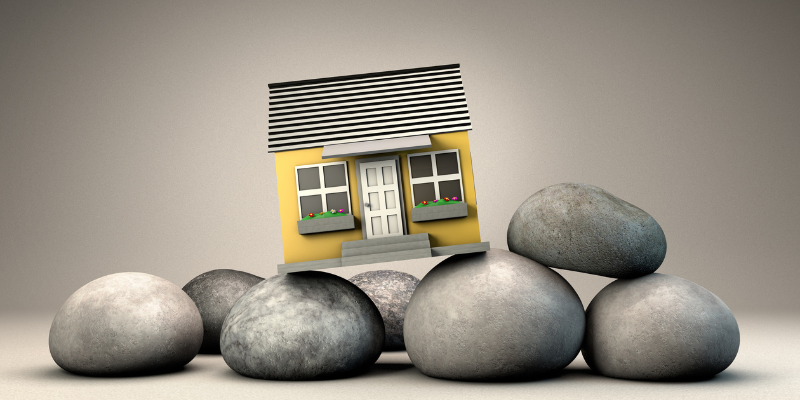
The Reality of California’s Foundation Problem Market
In May 2024, the median price of a home in California was $908,040, one of the highest in the nation. But what most sellers don’t realize is that even homes with foundation problems are selling in this market.
The median time to sell a house went up only a bit, from 26 days in December 2023 to 31 days in December 2024. That remains very rapid by historical standards. Issues with the foundation may add a few days to your timeline, but they aren’t always going to keep you on the market for months.
Let’s face it, selling a house with foundation problems demands a strategy. While there is still substantial demand from cash purchasers, investors, and homeowners prepared to take on projects given current market conditions in California, where, in the fourth quarter of 2024, only 15 percent of California households could afford to buy the $874,290 median-priced home, affordability remains a challenge.
California Homeowners Pre-sale Foundation Inspection Checklist
Before you freak out over those cracks in the foundation, you need to know exactly what you are dealing with. Because of the state’s varied geological features, foundation issues might vary greatly from one place to another.
The first step is to look at the outside of your property. Look for horizontal cracks in concrete walls, frequently a symptom of seismic stress. Vertical fissures could be a sign of settling, which is prevalent in places of expansive clay soil, such as the Central Valley.
Look for warning signals around your house: doors and windows that stick, cracks where walls meet ceilings, and floors that seem uneven when you walk on them. Inspect foundation walls in crawl areas for moisture damage or white chalky deposits known as efflorescence.
Take pictures of everything. Measure everything. This is good to know whether you are doing repairs or selling as-is. Sellers I’ve seen have lost thousands in talks simply because they couldn’t give clear documentation of existing concerns.
Consider employing a structural engineer for an initial evaluation. The 2019 California Building Code demands strict standards for seismic retrofitting. Basic retrofitting modifications might cost $4,000-$10,000+. Knowing these criteria ahead of time allows you to make educated selections on repair vs. sale methods.
Professional Foundation Engineering Reports for Real Estate Sales

A professional engineering report might sound costly, but it’s typically the best money you will spend. Those reports usually cost $500 to $1,500, depending on the size of your home and the complexity of the issues.
A structural engineer’s report can be useful in many ways in a transaction. First, it gives you good proof that there are difficulties, so you can be protected from responsibility claims later. Second, it often shows that scary-looking cracks are not as bad as they seem.
I’ve bought houses where the seller thought there was $50,000 in foundation damage, and it turned out the engineer’s report said the repairs were $8,000. That understanding flipped the whole negotiation upside down.
The report also aids potential purchasers in obtaining financing. Most lenders will want engineering studies on houses with obvious foundation problems. If you have it ready, it will really speed up the sales process.
Use qualified California engineers who understand local soil conditions, foundation challenges, and seismic regulations. Get detailed repair estimates and expert recommendations so you know exactly what needs attention. This information can be incredibly valuable—whether you’re planning to handle repairs yourself or using it as leverage when negotiating with cash buyers. If you need to sell your house fast in California, having clear repair documentation can help speed up the process, reduce uncertainty, and strengthen your position in discussions with potential purchasers.
California Geological Survey Reports and Foundation Stability Reports
Depending on where you live in California, foundation issues will vary drastically according to the geology. Homes in Marin County confront their own set of issues compared to those in Riverside or Fresno. Local knowledge of geology helps you site your property correctly.
The California Geological Survey shows fault lines, liquefaction zones, and landslide threats on detailed maps. The data can be used to explain foundation difficulties to prospective purchasers and establish that any problems are due to natural conditions, not bad construction or upkeep.
California’s seismic activity continually puts stress on foundations, and this is compounded by expansive clay soils and dry conditions. Depending on the region, costs in the Bay Area, Central Valley, and Southern California might vary by 30-50%.
Properties near an active fault line commonly endure constant foundation shifting. That may sound worrisome, but it is something that many buyers in earthquake-prone areas expect and embrace. The secret is honest disclosure and realistic pricing.
Hillside properties have their own set of issues. In regions such as Marin County, Hollywood Hills, and the Palos Verdes Peninsula, hillside foundation problems generally require a combination of retaining wall work and specialized drainage systems, which adds 25-40% to the cost of repairs.
Foundation Repair Projects and California Building Code Compliance

California building rules today are much tighter than when many homes were erected. Homes built before 1980 are among the most vulnerable, especially those with high foundations and cripple walls.
Thinking about repairing before selling? Keep in mind that putting your foundation up to code may cost more than basic repairs. But code-compliant repairs can greatly boost the value and marketability of your home.
Many buyers choose homes with improved foundations, especially in locations prone to earthquakes. Code-compliant work comes with permits and inspections, and documents that put purchasers and lenders at ease.
Most agents won’t tell you this, but occasionally it makes sense to sell as-is to a buyer who will take care of code compliance themselves. Cash buyers and investors typically have contractors that they work with who can do code modifications cheaper than an individual homeowner could.
Seismic Upgrades Needed for Earthquake-Prone Foundation Problems
Seismic retrofitting is increasingly significant in California real estate transactions. A standard sort of earthquake retrofit on a home with a raised foundation will cost an average of $3,000 to $7,000, depending on the work a certified contractor does.
More than $20 million in grant funds will be available to help defray the cost of seismic retrofits through initiatives such as Earthquake Brace + Bolt. These grants can drastically lower your out-of-pocket expenses.
Retrofitting usually consists of fastening your house to its foundation and strengthening cripple walls. The majority of the 76% of the elevated foundation retrofits done by the Earthquake Brace + Bolt program are less than $7,000.
The costs are much higher for homes with soft-story construction (living space over garage). Soft-story retrofits usually run between $15,000 and $25,000.
Think carefully about the return on investment. According to the National Institute of Building Sciences, every dollar invested in seismic retrofitting saves $13 in the long run. These benefits result from less damage, reduced repair costs, and maintained occupancy following earthquakes.
Cost-benefit analysis: Repair or sell as is with foundation problems
This decision point will determine your entire selling strategy. Let me give you the genuine numbers I am seeing in California’s market.
The cost of foundation repair varies widely from region to region and depends on the severity of the problem. San Francisco, Oakland, and San Jose are the most expensive places in California to repair foundations. Labor is $ 100-$ 150 / hr. The cost of living in the area is very high, and there is a dearth of skilled workers. Tougher seismic rules mean tougher retrofitting standards, which add $2,000 to $5,000 to the average cost of fixing the building.
Pricing in the Central Valley is a good comparison. Foundation repair prices in Fresno, Modesto, and Stockton are less expensive, often 20-30% less than Bay Area pricing.
Big foundation work prices grow quickly. Push pier systems cost $1,500-$3,000 per pier, and most residences require 8-15 piers. Helical pier systems are similar in price, averaging $2,000-$3,000 per pier.
What no one tells you is that repairs can cost more than you initially think. Contractors find more complications after the work starts. Foundation projects typically have 20-30% budget overruns.
Selling your home as-is removes the uncertainty and stress of making repairs or dealing with unexpected costs. It gives you a clear, straightforward process with a predictable timeline. For homeowners searching for we buy houses in Los Angeles solutions, companies like Eazy House Sale purchase properties in any condition—including homes with foundation issues—and can often close in as little as two weeks.
How Foundation Problems Impact Home Value and Market Price
Foundation difficulties can affect property values, but the extent will depend on the severity of the problem and the local housing market conditions. Minor settling fractures can diminish value by 5-10%, but serious structural problems can remove 20-30% of the market value.
In California’s competitive marketplaces, buyers often will ignore small foundation problems if properties are priced correctly. In San Mateo County, the median single-family home sold in 15 days for 104% of the list price and sold for $1,734,400. In Santa Clara County, the median single-family home sold for $1,810,000 in 11 days at 105% of the list price.
These markets are moving so swiftly that even properties with foundation issues that are properly priced are receiving numerous bids. Cash buyers and investors are actively seeking out properties with foundation concerns, perceiving them as an opportunity to purchase below market rates.
Regional variances are quite important. In earthquake-prone places like the Bay Area, buyers have different expectations for homes than in more stable geological areas. purchasers in Hollister or Hayward have a different idea of what constitutes foundation problems than purchasers in Sacramento or San Diego.
Be careful reviewing comparable sales. Search for recently sold properties in your neighborhood that have had comparable foundation difficulties. That data gives you actual price points for your case.
California Real Estate Foundation Problem Assessment and Disclosure Requirements
California law demands disclosure of relevant facts about the condition of the property. If it is a foundation issue, it clearly belongs in this category. It is important to disclose this properly for legal protection.
The Transfer Disclosure Statement (TDS) asks particularly about structural concerns. Not disclosing known problems with the foundation can lead to lawsuits, revoked sales, and huge financial liabilities.
Document your disclosure well. Include engineering reports, estimates of repair costs, and pictures of problem locations. Full disclosure not only legally protects you, but it also promotes buyer confidence.
Some sellers are concerned that transparency may kill buyer interest. In my experience, it’s typically the opposite. “Buyers like transparency, and they will consider known issues when making their offers, not just walk away.
Consider including repair estimates with your disclosures. This information lets purchasers know how much work is involved and what it will cost to fix, leading to more reasonable discussions.
Work with professional real estate agents who know foundation disclosure regulations. If presented and documented properly, you can reduce the negative impact on your transaction.
Selling Homes with Known Foundation Issues: Negotiating with Buyers
Negotiating with foundation issues involves different methods than a regular home sale. Buyers will ask for credits or price cuts, or for repairs to be made before closing.
Set your bottom line before listing. Know the lowest price you’ll accept and the maximum credits you’ll supply. Conversations over foundations can get emotional, and having limits in advance helps keep the conversations objective.
Respond to buyer demands for documents. Engineering data, contractor estimates, and permit information might help you get a better negotiating position.
Think about the buyer’s finances. Cash buyers have fewer lending restrictions than conventional loan buyers regarding foundation difficulties. Tailor your negotiation style accordingly.
Even in the competitive California marketplaces, foundation issues still generate many offer situations. Having foundation concerns doesn’t mean you have no leverage at all.
Expect problems during the inspection time. It is common for secondary negotiations to arise when buyers find secondary difficulties during professional inspections.
Difficulties in the Escrow Process When Foundation Problems Are Discovered
Foundation problems can make escrow time frames and criteria more difficult. Lenders frequently need extra paperwork, inspections, or renovations before they will fund loans.
Conventional loans have the toughest criteria. FHA loans require strict foundation standards to be met in order to be approved. VA loans have severe foundation criteria for veteran buyers.
Cash transactions eliminate most of the headaches of lending, but still need good documentation for title insurance and legal protection.
Expect longer escrow periods when there are foundation difficulties. Escrows are usually 30 days, but can be longer ( 45-60 days ) if the property needs further paperwork or renovations.
Work with escrow companies that have experience with foundation transactions. These professionals understand the paperwork involved and can speed up the process.
If you have a main deal that might be affected by foundation concerns, consider backup offerings. Having alternatives also gives a safety net in case initial buyers aren’t able to finish the transaction.
Additional Selling Options: Cash Buyers and Investment Companies for Damaged Properties

If your home has foundation difficulties, the fastest and most reliable way to sell is with cash purchasers. These buyers know construction problems and can close rapidly without financing hiccups.
Businesses such as Eazy House Sale are focused on buying properties that are in need of repair. They professionally assess foundation problems and submit competitive bids based on the current condition.
iBuyer firms are increasingly purchasing homes with modest foundation difficulties, but big problems usually surpass their risk tolerance. These corporations will purchase homes rapidly and typically for below market value. iBuyers had a rough 2023, but could get a second wind and still have a place in the market. They can become more enticing to sellers in a declining market.
Properties with major foundation problems do well in auction sales. Investors and contractors, who know the expense of repair, bid on properties at auction.
Consider direct marketing to area tradesmen and home flippers. These professionals often look for buildings with foundation difficulties as investment prospects.
Investors who flip houses to end users are buying the wholesale deals. Wholesale pricing is usually cheaper, but these sales are often bought up swiftly with little fuss.
Selling A California Home With Structural Foundation Issues – Timeline Expectations
Realistic expectations of the timeline reduce frustration and bad decision-making. Properties with foundation difficulties usually sell more slowly than properties in great condition.
Cash transactions to investors or companies like Eazy House Sale can close in 10-14 days. These purchases sidestep financing issues and inspection windows.
Traditional sales with financing often take 45-90 days from listing to close. Foundation difficulties add to timeframes owing to additional inspections, documentation, and potential repairs.
Plan on adding 2-4 weeks of preparation time before listing. Engineering studies, contractor estimates, and disclosure preparation take time but improve sale outcomes.
Market conditions will heavily influence timetables. In California, the speedier the market, the quicker the sale, even for homes with foundation difficulties; slower markets mean more time on the market.
Plan your home sale with seasonal timing in mind. Homes often sell faster in spring and summer, while winter can extend the selling timeline for fixer-uppers. Eazy House Sale buys houses cash, call us today.
FAQs
How Hard Is It to Sell a House with Foundation Issues?
Selling a property with foundation problems is undoubtedly more difficult than selling a pristine house, but it is not impossible in the market in California. Success is all on proper pricing, full disclosure, and targeting the right buyers. Investors and cash purchasers will often see foundation difficulties as possibilities.
What Decreases a House’s Value the Most?
Foundation difficulties are the top value-reducing elements. Outdated electrical systems, plumbing problems, and roof problems are also high on the list. Foundation difficulties have more impact on value, especially in California, where seismic safety is a worry. But location and market conditions can counteract much of this, particularly in very desirable areas where purchasers intend to put money into upgrades.
What Repairs Should I Avoid When Selling My Home?
Don’t take on large foundation repairs until you’re sure of the return on investment. In California’s expensive repair climate, the high cost of structural work is frequently more than the value it adds. Focus on cosmetic fixes and safety issues instead. Let buyers do the foundation work themselves, frequently at better contractor prices than individual homeowners can negotiate.
Selling a property with foundation issues in California doesn’t have to be a nightmare. Yes, it takes strategy, correct disclosure, and realistic expectations. But today’s market has a buyer for every home at the right price.
Whether you decide on a standard listing, a cash sale to an investor, or working with a company like Eazy House Sale, the goal is to understand your choices and pick the method that yields the most net proceeds with the least amount of stress.
If you’d want to talk about your specific circumstance, we’re here to help. No pressure; no strings. Just straight talk from someone who has bought California homes with foundation problems for over 15 years. Sometimes the best option is not what you would expect.
Helpful California Blog Articles
- Who Gets The House In A Divorce In California?
- Can You Sell a House As-Is Without Inspection in California?
- Do All Heirs Have to Agree to Sell Property in California?
- California Squatter’s Rights
- Can You Sell a House in Foreclosure in California?
- Can I Sell My House If I Filed Chapter 13 in California?
- If Your House Is Sold At Auction How Long Do You Have To Move In California?
- Best And Worst Months To Sell Your California Home
- Selling A House With Unpermitted Work In California
- Selling a Probate House in California
- Selling a House That Needs Repairs in California
- Selling a House With Water Damage in California
- Can a Seller Refuse Repairs After Inspection in California
- Selling a House with Foundation Issues in California
- How to sell a house by owner in California
- Sell Your Hoarder House Fast in California
- Can a Seller Back Out of a Real Estate Contract in California?