
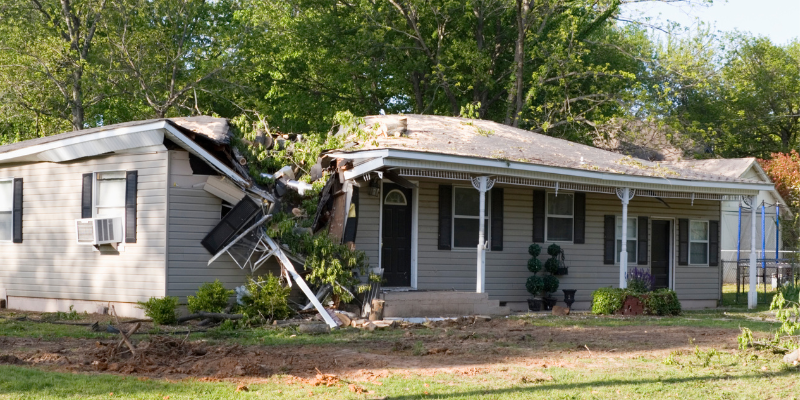
A blue tarp on the roof changes every conversation that comes after it. Through the first half of 2026, the United States logged a dozen weather and climate disasters that each topped a billion dollars in damage, according to Climate Central. Severe storms caused eight of the twelve. Behind each one sits a homeowner with an adjuster’s estimate and a stack of photos. When I walk through one of these houses, the seller nearly always asks me the same thing: what’s it worth now, and who’d buy it? Selling a storm-damaged house is very doable. Losing money on the way out is optional.
Why Storm-Damaged Sales Are Harder Than Normal Ones
Your house didn’t lose value because of the roof. It lost value because of what buyers now think sits behind the roof.
Lenders are the first wall. An appraiser who spots active water intrusion or a compromised structure will flag the condition, and most loan programs won’t fund until someone corrects it. Your buyer can be fully qualified and still unable to close.
Getting it insured is the second wall, and it’s quieter. Carriers rarely bind a new homeowners insurance policy on a property with open storm damage or an unresolved claim. No policy means no loan, and no loan means no closing. Then there’s inventory, and NAR counted 1.60 million homes for sale nationally in September 2026, a 4.8-month supply. A buyer who feels uneasy about flood risk or a patched roof just opens another listing.
Inspections turn into renegotiations on these listings. An inspector pulls one shingle and writes three pages. Then the buyer’s agent asks for a credit bigger than the actual repair. I’ve watched that loop play out on properties where the damage was minor. Paper is what breaks it: the adjuster’s scope, the contractor’s invoice, the permit, and the photos.
Flood is its own animal. Higher premiums and flood zone maps follow the property forever, and buyers price that risk in whether you do or not. Gather your elevation certificate and flood claim history before you list, since buyers and their lenders tend to ask for both. If water got inside the house, our guide on how to sell a flooded house in California covers that side of the sale.
If you want to avoid the repairs, insurance hurdles, and buyer negotiations, you can also compare your options with a cash offer. Contact us to see what we can offer for your storm-damaged house as-is.
Should You Settle the Insurance Claim Before You Sell?
Selling with an unsettled claim usually costs you money, and often more than the repairs would have.
Insurance proceeds generally belong to whoever owned the property when the loss happened, not whoever owns it at closing. So a buyer stepping in mid-claim wants one of two things. Either the check gets assigned to them, or the same amount comes off the price. Either way, your settlement ends up in somebody else’s pocket.
California gives storm and fire policyholders specific protections, and they’re worth knowing before you sign anything. Under Insurance Code section 2071, a suit on the policy has to be filed within 12 months after the inception of the loss. That window stretches to 24 months when the loss ties to a declared state of emergency.
Replacement cost runs on its own clock. The California Department of Insurance notice on post-disaster claim laws says a policy can’t give you less than 12 months from the first actual cash value payment to collect full replacement cost. After a declared state of emergency, that floor rises to 36 months.
Rules outside California differ, so call your state’s department of insurance to confirm your deadlines. A public adjuster works for you instead of the insurer and takes a cut of the settlement. On a big structural loss, that fee often pays for itself. On a modest roof claim, it can eat whatever extra they recover.
Do I Have to Repair Storm Damage Before Selling?
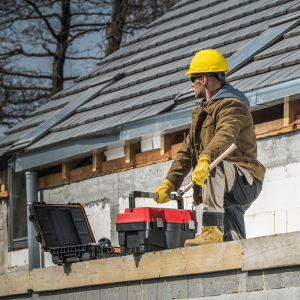
For years I told sellers to fix the roof first, and I was wrong about half the time. Repairs make sense when they open a door that’s otherwise shut, like financing or insurability, or a buyer pool that wouldn’t exist without them. A roof replacement that lets conventional homebuyers bid tends to pay for itself. New quartz counters under a ceiling with water stains don’t.
Partial repairs are the real trap, because patching three rooms and leaving two gets you a property that looks repaired and inspects like a problem. That’s worse for your price than honest, visible damage.
People underestimate permits. Unpermitted structural work leaves the county’s records out of step with what’s really built, which spooks buyers, and it lands on your disclosure form anyway. If you’re rebuilding, pull the permit.
Renovations also take longer than any contractor’s estimate. Storms create labor shortages in the exact market where you need the labor, and after a regional hail event, roofers can book out for months.
Selling as-is is a legitimate strategy. Eazy House Sale buys properties in whatever condition the weather left them, which moves the repair risk onto the buyer and off your bank account. You net less on paper and often keep more in practice. Commissions, holding costs, and the inspection credit a retail buyer would’ve demanded all drop away. If skipping the work sounds better, see how we buy houses in California in any condition.
What You Have to Disclose About Storm Damage
California sellers of single-family residential property have to deliver a Real Estate Transfer Disclosure Statement under Civil Code section 1102, as soon as practicable before title transfers. The form asks directly about flooding, drainage, or grading problems. It also asks about major damage from fire, earthquake, floods, or landslides, and about repairs made without necessary permits. Your known storm damage belongs on that form in writing. I’ve watched transactions come apart late in escrow when a seller left it off.
Section 1102(c) makes any waiver of those requirements void as against public policy. An “as is” clause shifts risk for conditions a buyer could have found. It doesn’t let anyone hide a known defect.
The form isn’t the ceiling, either. Under Civil Code section 1102.8, the listed items don’t limit disclosure duties that come from other law, including the rules against fraud and misrepresentation. If you know something that would change what a reasonable buyer pays, say it, even when no checkbox asks.
Other states run their own disclosure rules, and some are far looser. Your state’s statutes or real estate commission will show which form applies.
Over-disclosure has never cost one of my sellers a dime. Under-disclosure has cost people far more than the repair would have. Hand over the claim file, the adjuster’s report, the invoices, and the photos, and have the buyer sign that they got all of it.
Your Liability After the Sale Closes

“I sold it as-is and signed the paperwork, so I’m clear.” Mostly, but not automatically.
Under Civil Code section 1102.13, a seller who willfully or negligently fails to perform a disclosure duty is liable to the buyer for actual damages. In plain terms, that’s what it really costs to fix what went undisclosed. Missing the form doesn’t undo the sale itself, though it does open a damages claim. We break down whether a seller is responsible for repairs after closing in California in a separate guide.
Knowledge is the pivot. Liability under that section takes a willful or negligent failure, and the form asks what you’re aware of. A seller who truly didn’t know about a hidden defect is in a much safer spot. Still, a ceiling stain you noticed and chose not to look into starts to look a lot like knowledge once a buyer’s attorney gets involved. Your records prove what you knew and when.
Keep copies of everything after closing. Save the repair invoices, the insurance claim letters, the signed disclosure, and the buyer’s inspection report. Scan them and store the scans outside the house, in a cloud folder or an email to yourself, where a move or a dead laptop can’t take them with it. If a buyer calls eighteen months later about a leak, a dated contractor invoice answers the question fast.
One more exposure gets overlooked completely: the stretch before closing. A tarp that blows loose and hurts a neighbor is still your problem, and so is debris that dents the car next door. Keep your homeowners insurance in force until the deed records, even on a vacant property, and tell your insurer it’s vacant so the coverage holds.
How to Price a Storm-Damaged House
What’s my house worth with a hole in the roof?
Start with the repaired value from recent comparable sales nearby. Subtract a real repair figure from a real contractor, then subtract a bit more. Buyers discount damaged properties past the repair cost because they’re pricing uncertainty and carrying time. They’re also pricing the chance that opening one wall exposes two more problems. Investor house buyers in Riverside and the surrounding cities in California may also price around the repair risk, carrying costs, and uncertainty rather than treating the property like a move-in-ready home.
Pricing a storm-damaged house like an undamaged one with a token cut is the most expensive mistake I see. Those listings sit, go stale, and finally sell below where an honest price would’ve landed on day one. NAR put the national median time on market at 33 days in September 2026. Damaged properties tend to take longer than that, so build the extra carrying cost into your expectations before you pick a list price.
Your insurance settlement isn’t a price adjuster. If the claim paid out, that money’s yours, and the house still sells at its current condition value. Sellers mix the two up constantly and overprice by exactly the check they already cashed.
Get the contractor’s written scope before you list, not after an inspection forces the talk. A seller holding a documented $28,000 roof bid negotiates from a position. Guess, and you’re negotiating against whatever figure the buyer’s agent invents.
Listing a Storm-Damaged House on the Open Market

A traditional listing still works for storm-damaged properties when the damage is contained and documented. Pick a real estate agent who’s handled post-disaster sales, not just a high-volume lister. Ask how many damaged properties they’ve closed in the last two years.
Photos have to show the condition honestly. Hiding the damaged room guarantees a cancellation after the first showing, and every wasted showing costs you more than the truth would.
Price it right, then market to the right pool. Investors and second-home buyers made up 20 percent of existing-home sales in September 2026, up from 15 percent a year earlier. They’re the buyers most at ease with a repair project. Have your agent put the repair estimates in the listing packet, since investors run their numbers before they book a showing.
Expect the inspection contingency to turn into a second negotiation. Decide ahead of time what you’ll credit and what you won’t. Deciding under pressure, contract in hand, is how sellers give away five figures. A pre-listing inspection and two contractor bids give you real numbers to point at when the buyer’s report shows up.
Add up the full cost of going retail. Count agent commissions, title and escrow charges, and any concessions you grant. Then add every month of mortgage, taxes, and premiums while the house waits. On a damaged property, those costs often wipe out the premium a retail sale was supposed to deliver.
Are Cash Buyers a Better Choice for a Storm-Damaged House?
Sometimes, and it depends on what’s stuck.
Cash buyers price a damaged property backward. We start with what the house is worth repaired, subtract the real cost of the work, subtract a margin, and that’s the offer. No commission comes off the top, and no lender orders an appraisal that sinks the whole thing. Nobody walks because their insurance company won’t write a policy on a house with an open roof. Cash house buyers in Long Beach and other California cities can be an option when traditional financing gets complicated.
The math doesn’t beat a retail sale every time. If your damage is cosmetic, the claim’s already paid and you’ve got a few months of patience, listing usually nets more. Cash wins when time, repair money, or claim limbo is what’s really blocking you.
Ask any cash buyer for proof of funds and the name of their title company before you sign. A buyer who closes in their own name won’t mind the question.
Financing on the retail side matters too. Freddie Mac’s average 30-year fixed mortgage rate was 6.86 percent in September 2026, as cited in NAR’s existing-home sales report. At that rate, fewer buyers can carry both a payment and a repair bill.
Frequently Asked Questions
Can I sell a house with an open insurance claim?
Yes. You can assign the claim proceeds to the buyer, or settle the claim, keep the funds, and adjust the price. Tell the buyer which route you’re taking before you sign. Finding out later is what blows up transactions.
Do I have to disclose storm damage that’s already repaired?
In most states, yes. Disclosure laws generally cover past material damage, not just current condition. Repaired damage backed by permits and receipts rarely scares a buyer. Undisclosed repaired damage that turns up later invites a lawsuit.
How fast can a damaged house actually close?
Seven to fourteen days is normal for a cash sale with clear title. Probate, liens, or a contested claim stretch that out. The house’s condition rarely slows a closing.
Is it worth repairing before selling?
Only when the repair returns more than it costs. That’s uncommon with storm damage, because the work tends to be structural rather than cosmetic. Run the numbers both ways before you call a contractor.
If you’re sitting on an estimate you don’t want to pay and a house you didn’t plan to keep, it costs nothing to compare an as-is offer to a retail listing. Eazy House Sale can provide a cash offer for your house as-is, giving you another option to consider. Call us at (855) 915-1382 to discuss your options. Get the numbers in front of you, take a few days with them, and decide when you’re ready. The house isn’t going anywhere, and neither is the option.
Helpful California Blog Articles
- How Much It Costs to List a Home on the MLS in California
- Appraisal Required Repairs in California
- How To Sell A House With Foundation Issues In California
- Do Sellers Pay Closing Costs In California
- Do You Need a Lawyer to Add a Name to a House Deed
- How Long Should You Live in a House Before Selling in California
- How to Sell a Flooded House in California
- Selling a House with Solar Panels in California
- How to Sell a Rental Property Without Paying Taxes
- How Long Can a Seller Stay in the House After Closing?
- Selling a Storm-Damaged House Without Losing Money